MMIC RF Power Amplifier: The Critical Technology Powering 5G, 6G, and Next-Gen Wireless Systems in 2026
The wireless industry is moving faster than ever. With 5G networks fully maturing and 6G research shifting into high gear, RF engineers face constant pressure to deliver more power, higher efficiency, and smaller form factors at microwave and millimeter-wave frequencies.
Enter the MMIC RF power amplifier — the unsung hero enabling these advances.
Unlike bulky traditional amplifiers built from discrete parts, MMIC (Monolithic Microwave Integrated Circuit) power amplifiers integrate the entire amplification chain — transistors, matching networks, bias circuitry, and protection — onto a single semiconductor chip. In 2026, GaN-based MMIC RF power amplifiers are seeing explosive adoption thanks to their unmatched power density and efficiency.
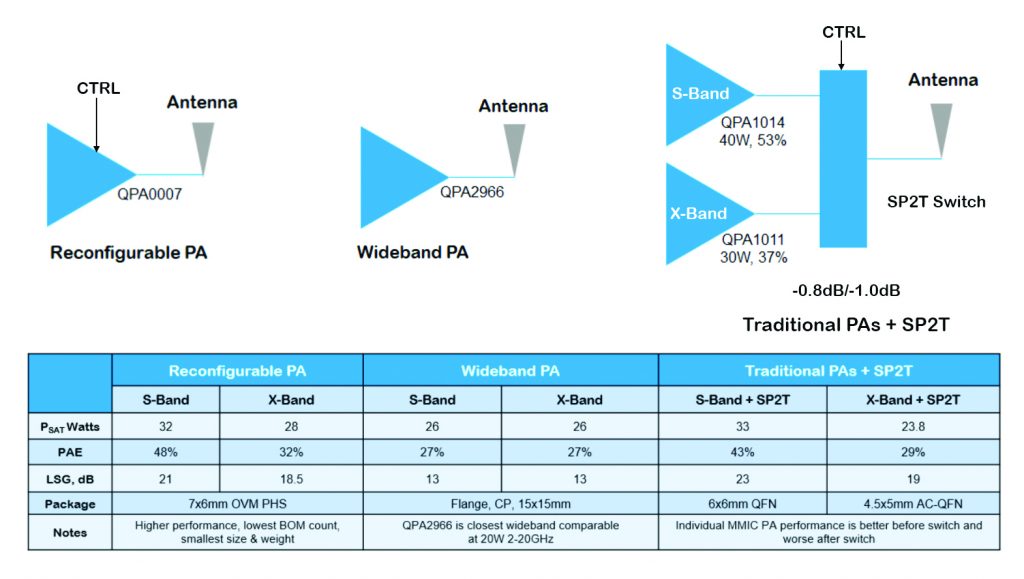
Why MMIC RF Power Amplifiers Have Become Indispensable in 2026
Modern wireless systems demand amplifiers that can handle complex modulation schemes (256-QAM and beyond) while staying cool and energy-efficient. Here’s why MMIC RF power amplifiers now dominate:
- High Power Density — Tens of watts from a chip smaller than a fingernail
- Outstanding Efficiency — GaN variants routinely hit 50–60%+ PAE, slashing cooling needs and operating costs
- Wide Bandwidth — Single devices covering sub-6 GHz to mmWave bands without retuning
- Superior Linearity — Excellent ACLR and EVM performance for today’s dense spectrum
- SWaP Savings — Size, weight, and power reductions that are game-changing for satellites, drones, and portable gear
These advantages translate directly into lower BOM costs, faster time-to-market, and systems that simply perform better under real-world conditions.
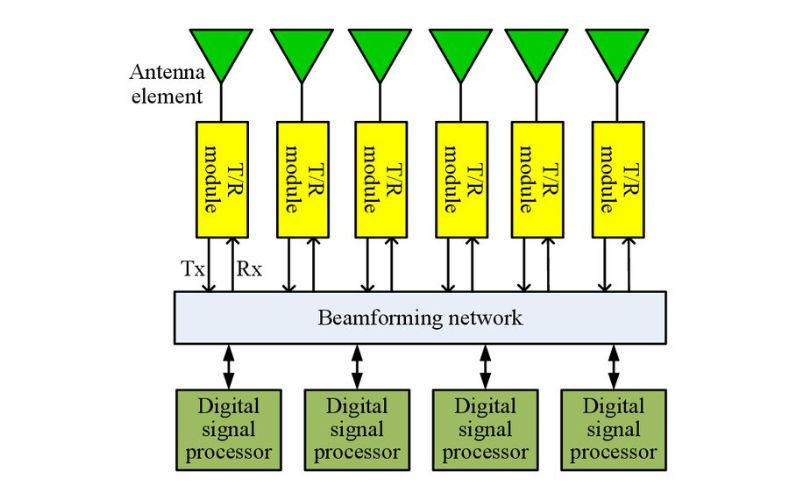
Hot Applications Driving Demand in 2026
MMIC RF power amplifiers are at the heart of the most exciting projects right now:
- 5G Advanced & Early 6G Infrastructure — Powering energy-efficient massive MIMO and small-cell deployments
- Defense Radar & Electronic Warfare — Enabling compact AESA radars and high-power jammers
- Satellite & LEO Constellations — Low-SWaP uplink amplifiers that reduce launch costs
- Test & Measurement Equipment — Broadband drivers for next-generation analyzers and signal generators
- UAVs & Autonomous Systems — Lightweight, high-range comms modules
The ongoing shift toward GaN-on-Si processes is also making high-frequency, high-power solutions more affordable than ever.

Practical Selection Tips for RF Designers
When evaluating MMIC RF power amplifiers for your 2026 projects, focus on:
- GaN technology for maximum power and efficiency
- True frequency coverage with margin for your band
- Packaging that matches your thermal and assembly strategy (bare die, QFN, or flange)
- Linearity metrics that align with your modulation requirements
- Proven long-term availability and supply-chain stability
Getting these details right early can save months of redesign later.
A Reliable Partner for Demanding Applications
Engineers tackling ambitious designs consistently look for suppliers who combine cutting-edge specs with rock-solid quality and support. ZR Hi-Tech has earned strong recognition in the RF community for delivering wideband, high-performance MMIC RF power amplifiers that meet the stringent requirements of both commercial 5G/6G and defense applications.
The Road Ahead
As we push deeper into 2026 and beyond, MMIC RF power amplifiers will keep evolving — with even tighter integration, built-in digital control, and smarter efficiency features. They’re no longer just a component; they’re a foundational technology making the impossible possible.
If you’re specifying parts for a new project this year, exploring the latest generation of MMIC RF power amplifiers should be at the top of your list.
What band or application are you working on right now? Drop your thoughts or questions in the comments — I’d love to hear how MMIC technology is fitting into your designs!


Comments
Post a Comment