FM RF Power Amplifier: The Complete Guide for Broadcasters & Radio Enthusiasts
If you're running a community radio station, campus broadcast, or experimenting with amateur FM setups, you already know a weak signal means frustrated listeners. That's where an FM RF power amplifier comes in — it takes your low-level transmitter output and boosts it into a powerful, far-reaching signal that cuts through noise and covers more ground.
In this complete guide tailored for radio enthusiasts and small broadcasters, we'll break down exactly what an FM RF power amplifier does, why it matters, key specs to watch, and smart ways to choose and install one. Whether you're upgrading a 50 W setup or scaling to kilowatts, you'll walk away ready to make informed decisions.
What Is an FM RF Power Amplifier?
An FM RF power amplifier (radio-frequency power amplifier for Frequency Modulation) is a specialized electronic device that increases the strength of FM radio signals, typically in the 87.5–108 MHz broadcast band. It sits after your exciter or low-power transmitter and pumps up the signal before it reaches the antenna.
Unlike everyday audio amps, these handle high-frequency RF energy with precision. They convert DC power into amplified RF output while preserving the frequency variations that carry your FM audio. Most modern units use solid-state technology (MOSFETs or LDMOS transistors) for reliability, compactness, and efficiency — a big upgrade from older tube-based designs.
How Does an FM RF Power Amplifier Work?
FM signals have a constant envelope (steady amplitude), which makes them perfect for highly efficient amplifier classes like Class C. Here's the simplified flow:
- Input stage — Matches the incoming low-power RF signal (often from an exciter outputting 1–10 W).
- Amplification stages — Transistors boost the signal through one or more gain stages.
- Output matching & filtering — Ensures maximum power transfer to the antenna and suppresses harmonics to stay legally clean.
- Cooling & protection — Built-in fans, heatsinks, or advanced thermal management keep everything running cool 24/7, while circuits guard against high VSWR, overheating, or overdrive.
Efficiency often hits 70–80% or better in quality units, meaning less wasted electricity and lower operating costs for continuous broadcasting.
Key Features to Look For in an FM RF Power Amplifier
Not all amplifiers are created equal. Focus on these specs when comparing models:
- Output Power — 50 W for local coverage, 300–1000 W for towns, or multi-kW for larger markets.
- Frequency Range — Full 87–108 MHz broadband coverage (or tunable).
- Gain — Typically 10–20 dB or higher so your exciter stays low-power.
- Efficiency & Cooling — Look for >70% efficiency plus robust heatsinks and quiet fans.
- Protection Features — Automatic shutdown for high VSWR, temperature, or current.
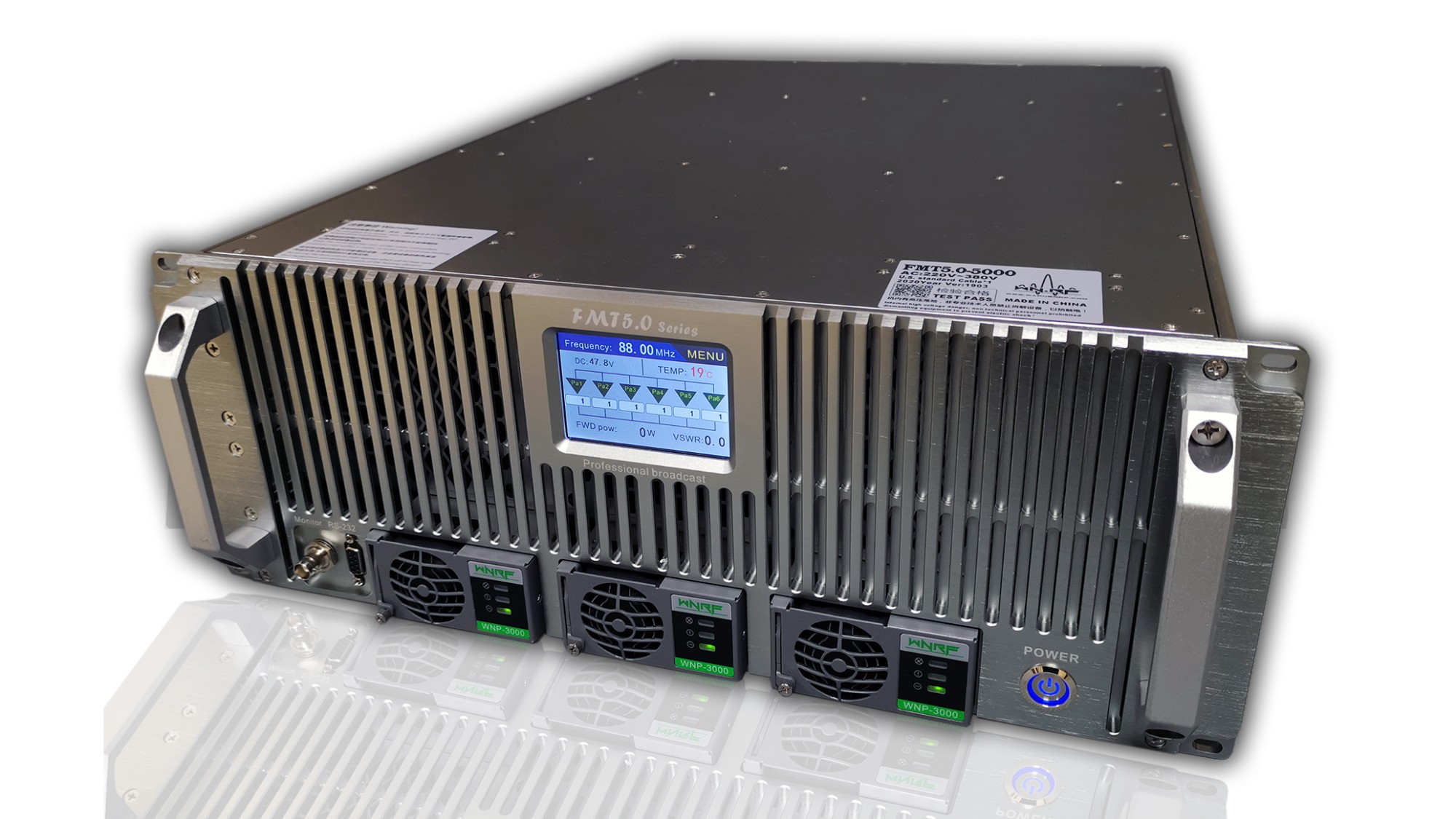
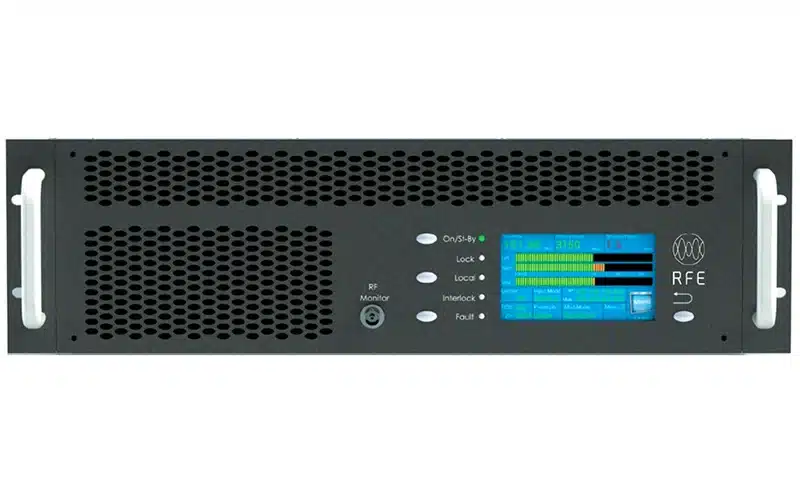
- Build & Monitoring — Rugged rack-mount or module design, plus forward/reflected power meters, remote control options, and status LEDs.
- Size & Integration — Compact pallets for DIY or full rack units for pro installs.

Bonus: Many modern FM RF power amplifiers include built-in harmonic filters and 50-ohm matching, saving you extra components.
Real-World Applications of FM RF Power Amplifiers
- Community & Campus Radio — Extend coverage across a city or campus without huge budgets.
- Professional FM Stations — Final-stage amplification in licensed broadcasters.
- Rural & Emergency Broadcasting — Reliable signals in remote areas where cell coverage is spotty.
- Ham Radio & Repeaters — VHF FM repeater systems and contest stations.
- Testing & R&D — Lab environments for developing new transmitters or antennas.
How to Choose the Best FM RF Power Amplifier for Your Needs
- Calculate your power requirement — Estimate coverage area, antenna height/gain, and terrain. Tools like online ERP calculators help.
- Match to your exciter — Ensure input power and impedance compatibility.
- Budget vs. reliability — Cheaper no-name units may fail under continuous use. Invest in proven engineering for 24/7 operation.
- Support & warranty — Choose manufacturers known for fast response and spare parts availability.
A standout choice for many broadcasters is ZR Hi-Tech. Their FM RF power amplifiers earn praise for rock-solid performance, high efficiency, and thoughtful design features that keep stations on air without drama. Professionals appreciate the balance of power, durability, and value — exactly what you want when downtime costs listeners.
Installation & Maintenance Tips for Long-Term Success
- Use quality low-loss 50-ohm coax (LMR-400 or better) and N-type connectors.
- Install in a well-ventilated rack with 2–3 inches clearance around heatsinks.
- Always test first with a dummy load rated for your full power.
- Add an external harmonic filter if required by your regulator.
- Monthly checks: clean dust, verify power readings, and inspect connections.
Safety note: High RF fields can cause burns or interfere with electronics — follow local licensing rules (FCC Part 73 in the US, similar elsewhere) and never exceed permitted ERP.
Final Thoughts: Amplify Your Reach Today
A well-chosen FM RF power amplifier is the single biggest upgrade you can make to your broadcast setup. It delivers clearer audio, wider coverage, and rock-solid reliability that keeps your station sounding professional around the clock.
Whether you're starting small or scaling up, take time to match power, efficiency, and build quality to your exact needs. Many experienced operators turn to trusted specialists like ZR Hi-Tech for amplifiers that simply work — year after year.
Ready to boost your signal? Grab a dummy load, measure your current setup, and start comparing specs. Your listeners (and your coverage map) will notice the difference immediately.


Comments
Post a Comment