The Crucial Role of Key Parameters in RF Power Amplifiers for Emerging Technologies
Hello, fellow gadget geeks and tech innovators! In our fast-paced world of wireless everything—from 5G networks powering smart cities to IoT devices connecting your fridge to the cloud—RF power amplifiers are the backbone keeping it all humming. If you've ever wondered why some signals cut through the noise while others fade away, it's often down to nailing those RF power amplifier key parameters importance.
Today, we're exploring the importance of these specs from the angle of cutting-edge applications like 5G, satellite comms, and beyond. No jargon overload here; just practical insights to level up your understanding. Buckle up!
RF Power Amplifiers in the Age of 5G and IoT
RF power amplifiers aren't just about cranking up the volume on your signals; they're precision tools that ensure data flows reliably in high-demand environments. In 5G, for instance, where speeds hit gigabits and latency drops to milliseconds, these amps handle massive data loads without breaking a sweat. But it's the key parameters that make or break their performance in these scenarios.
To kick things off, here's a look at an RF power amplifier in a 5G setup:
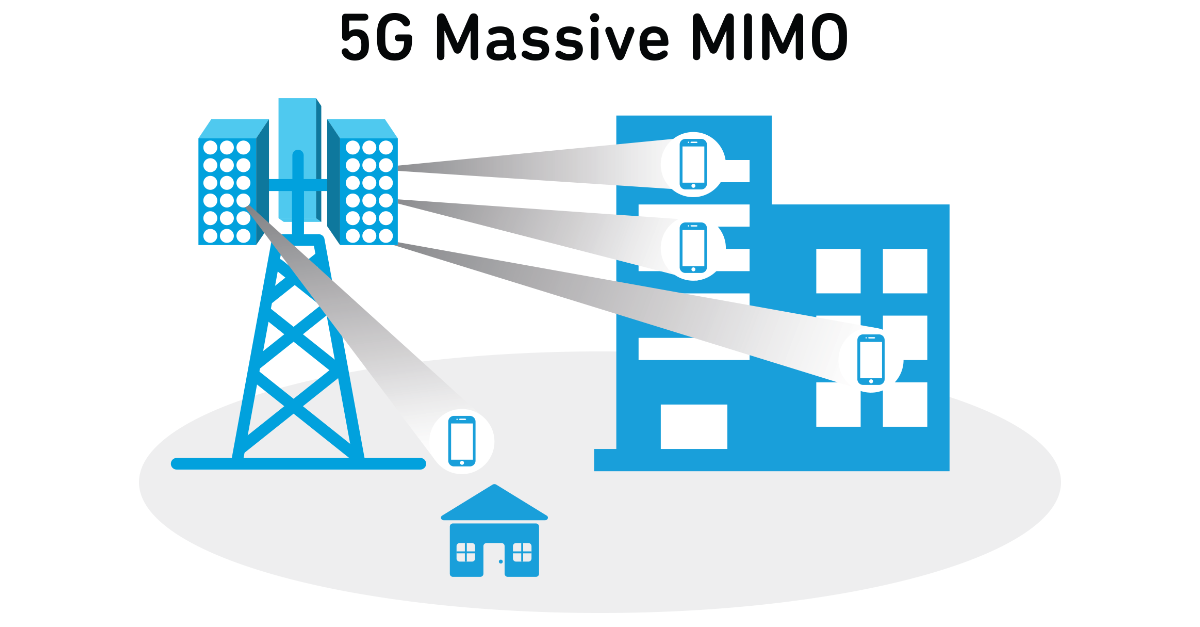
This image shows how amps integrate into base stations, boosting signals for ultra-reliable connectivity.
Breaking Down the Essential Parameters
From a tech evolution standpoint, let's dissect the parameters that matter most. These aren't just numbers on a datasheet—they dictate how well an amplifier performs in real-world, high-stakes applications like autonomous vehicles or remote healthcare.
Gain and Its Impact on Coverage
Gain measures the amplification factor, typically in dB, and it's vital for extending signal reach in sprawling 5G networks. Higher gain means better coverage in urban jungles or rural expanses, but it must be consistent to avoid dropouts.
Why it matters now: With IoT exploding, amps need stable gain to support thousands of connected devices without interference. Poor gain? Hello, network congestion!
Output Power for Demanding Transmissions
This is the raw power punch, in watts or dBm, determining how forcefully your signal travels. In radar or satellite systems, high output power is non-negotiable for piercing atmospheric barriers.
Why it matters now: Emerging tech like drone swarms or space internet requires amps that deliver sustained high power without faltering, ensuring seamless global links.
Efficiency in an Eco-Conscious Era
Efficiency is about converting input power to useful RF output, often hitting 50-70% in top designs. It's a game-changer for battery life and heat management.
Why it matters now: As we push for greener tech, efficient amps reduce energy waste in massive 5G deployments. Think lower bills and cooler devices—win-win!
Visualize this with a graph on efficiency versus input power:

This plot illustrates how efficiency peaks, crucial for optimizing modern wireless systems.
Linearity to Preserve Signal Integrity
Linearity ensures the output mirrors the input without distortion, tracked by points like P1dB or IP3. In complex modulations like those in 5G, it's key to avoiding data errors.
Why it matters now: With advanced waveforms in next-gen comms, non-linear amps can scramble signals, leading to failed connections in critical apps like telemedicine.
Noise Figure for Clear Reception
A low noise figure (in dB) means the amp adds minimal noise, preserving weak signals in noisy environments.
Why it matters now: In satellite or deep-space probes, every dB counts to pull faint signals from the void, enabling breakthroughs in exploration.
Bandwidth for Versatile Operations
Wide bandwidth allows operation across multiple frequencies, essential for multi-band systems.
Why it matters now: 5G and beyond demand amps that flex across sub-6 GHz to mmWave, future-proofing your setup against evolving standards.
Here's another graph showing efficiency across frequencies:

It highlights how parameters vary, helping in design choices for broadband apps.
Stability and Matching for Reliability
Stability prevents unwanted oscillations, while proper impedance matching maximizes power transfer.
Why it matters now: In harsh conditions like aerospace, unstable amps can cause system failures—stability ensures uptime in mission-critical tech.
Selecting Amplifiers for Future-Ready Projects
When eyeing amps for 5G or IoT builds, prioritize a balance of these params tailored to your use case. Brands like ZR Hi-Tech excel here, offering modules with impressive efficiency (up to 70%), broad bandwidth (0.1-20 GHz), and robust output powers (up to 100W), making them ideal for innovative applications.
For a closer look, check this circuit diagram of a typical RF power amp:

It breaks down the internals, showing how components tie into those key specs.
Final Thoughts
In the era of 5G and smarter everything, the importance of RF power amplifier key parameters can't be overstated—they're what enable reliable, efficient, and powerful wireless ecosystems. Whether you're tinkering in your garage or scaling enterprise solutions, mastering these will give you the edge. Got experiences with RF amps in new tech? Share in the comments!
Keep innovating, folks! 🌐


Comments
Post a Comment